
Engineering
Off-site construction: why solar infrastructure is industrialising
Solar panels are made in factories by the million. The structures that carry them are still assembled piece by piece on every car park. That gap is solar’s next frontier.
The situation
Module costs fell sharply over a decade thanks to industrialisation. Meanwhile structures, foundations and site work remain bespoke: repeated studies, parts assembled on site, weather, overlapping trades. On a car park, these items weigh more and more in total cost.
What prefabrication changes
- Quality: controlled production, tight tolerances.
- Time: the factory produces while the site obtains permits.
- Safety: less work at height and fewer overlapping trades on site.
- Cost: moulds and engineering amortised across projects.
- Operations: fewer days of disruption on an open site.
Conditions for success
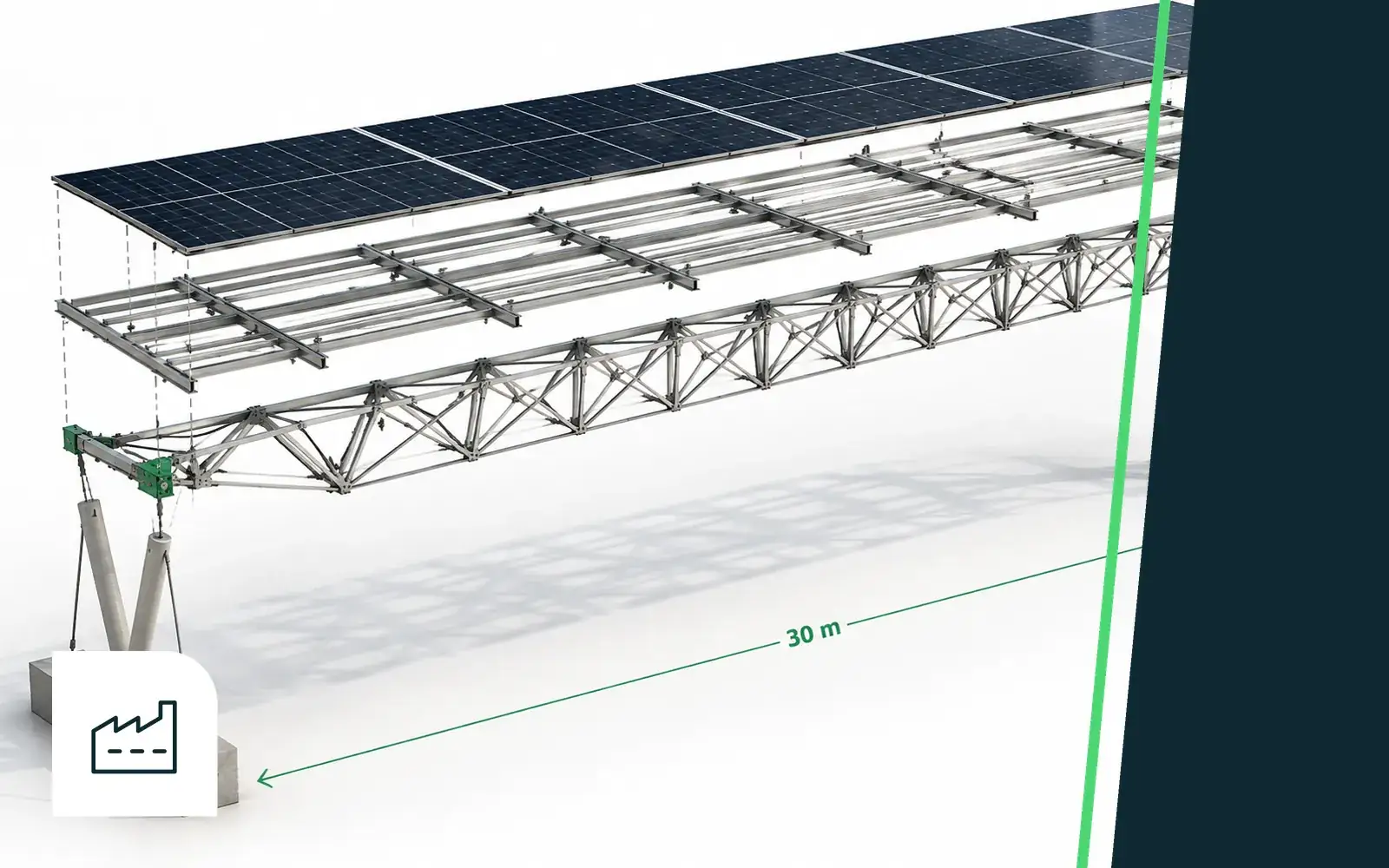
Industrialising requires a standard product, varied by configuration rather than redrawn, and enough volume to amortise tooling. That is why SUUN starts from a single 30 m module and an industrial concrete partner, Groupe FEHR.
At SUUN
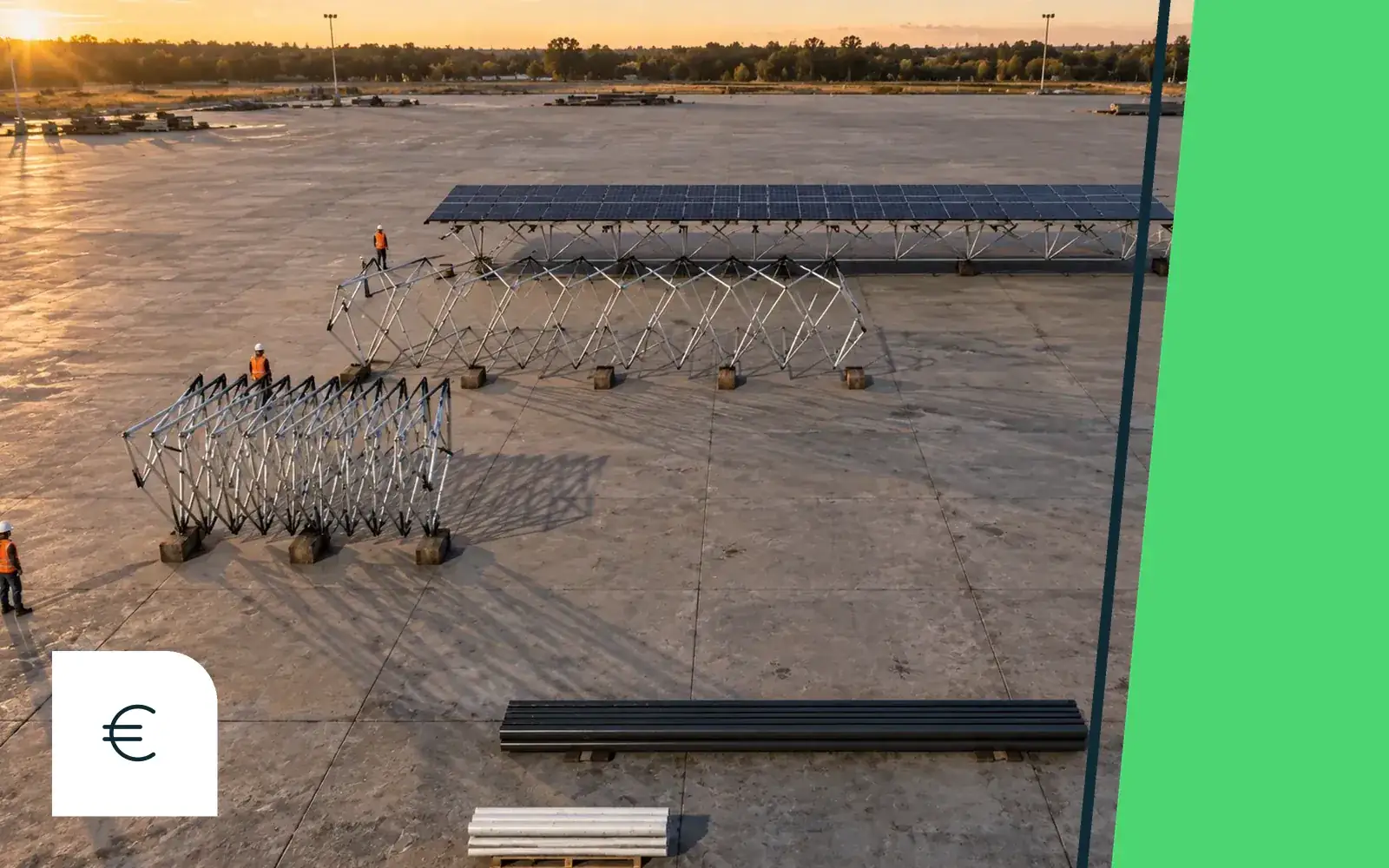
Factory-cast UHPFRC pillars, a superstructure pre-assembled and transported folded, ARKLOCK deployment and locking on site: works are reduced to foundations, lifting and connection. See the full sequence.
Frequently asked questions
Does prefabrication limit possible shapes?
It favours repeated configurations; the architecture comes from rhythm, slenderness and options rather than one-off parts.
Does transport cancel out the gain?
A module transported folded takes little space; the aim is to optimise trucks per span.
General information, up to date at the date shown. Design and regulatory compliance of each project must be validated by the competent teams.