
Engineering
Solar carport carbon footprint: steel, timber or UHPFRC?
A carport generates low-carbon electricity, but building it has a footprint. Reducing it means looking beyond the panels.
Where the footprint sits
- PV modules: manufacturing and origin, often the largest item.
- Structure: mass and material.
- Foundations and civil works: poured concrete, excavation, resurfacing.
- Transport and works: truck count, machinery, duration.
- End of life: reuse, recycling.
Comparing honestly
Comparing materials per cubic metre or per kilo makes no sense: UHPFRC carries more carbon per cubic metre than ordinary concrete, steel more than timber. What counts is the whole structure for equal service: same covered area, same loads, same life, foundations included. A life-cycle assessment using a recognised method is the only serious judge.
Structural levers
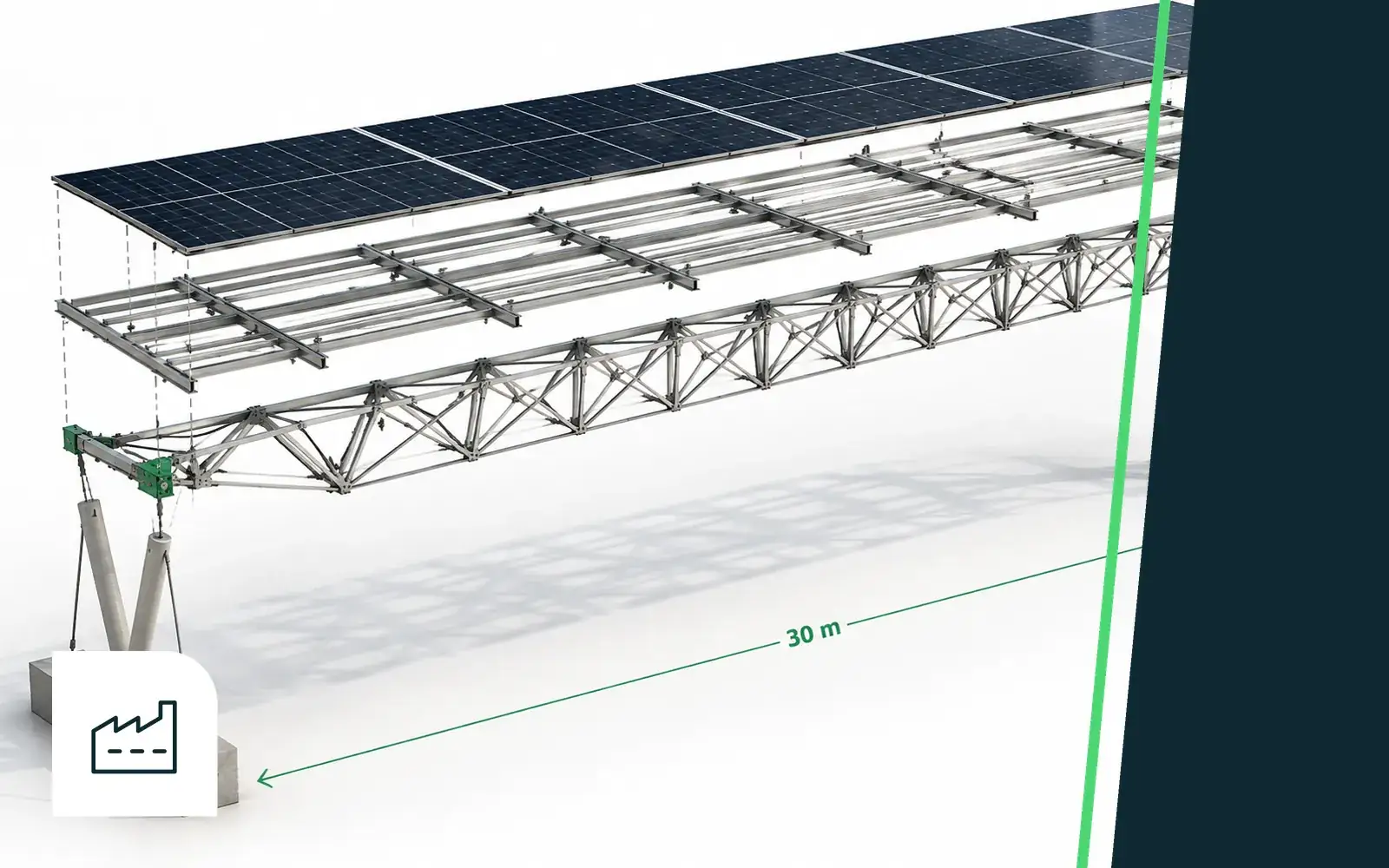
Fewer supports mean less poured foundation; slender sections mean less material; a very long life and a reusable structure spread the footprint over more years of service. SUUN combines these levers.
Our figures, with caution
Our design studies target up to −72% structural CO₂ versus an equivalent steel carport. That is an engineering target from a simplified, unaudited comparison, which we will confirm with a full life-cycle assessment on the first projects.
Frequently asked questions
Is timber always best?
It has a low manufacturing footprint but needs larger sections and more supports. The balance depends on the whole project.
Do panels matter more than the structure?
Often, yes. But structure and foundations are where the designer has the most room to act.
General information, up to date at the date shown. Design and regulatory compliance of each project must be validated by the competent teams.