
Use cases
Solar canopies for shopping centre car parks
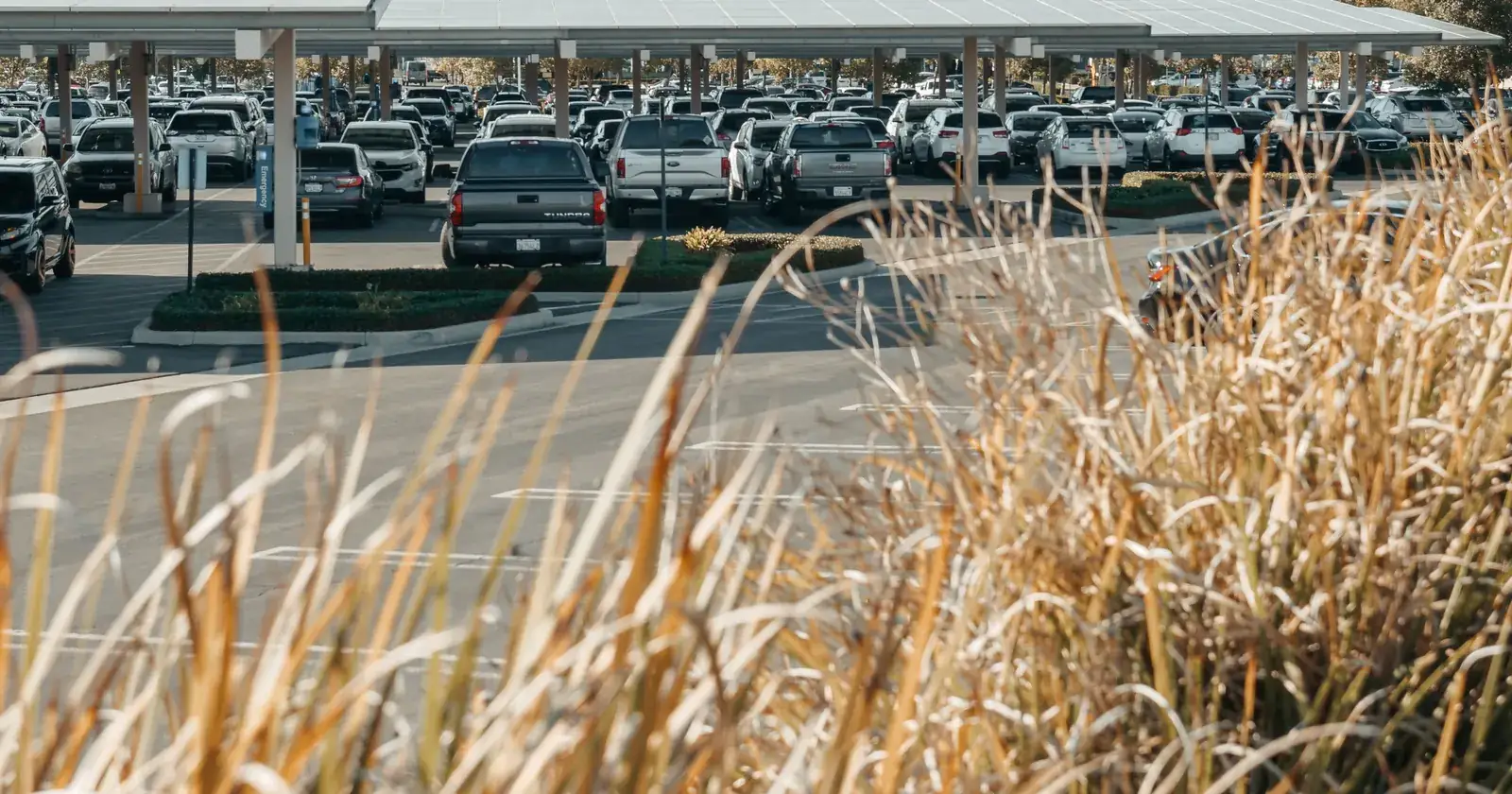
For a property owner or retailer, the car park is the first image of the site and an under-used asset. A canopy can make it compliant, comfortable and productive without losing a space.

What matters on a retail site
- Compliance: most French retail car parks exceed 1,500 m² and fall under the APER law.
- Spaces: every lost space affects footfall.
- Customer experience: summer shade, rain shelter, lighting, charging.
- Works: no closure, no disruption at peak times.
Architecture rather than a shelter
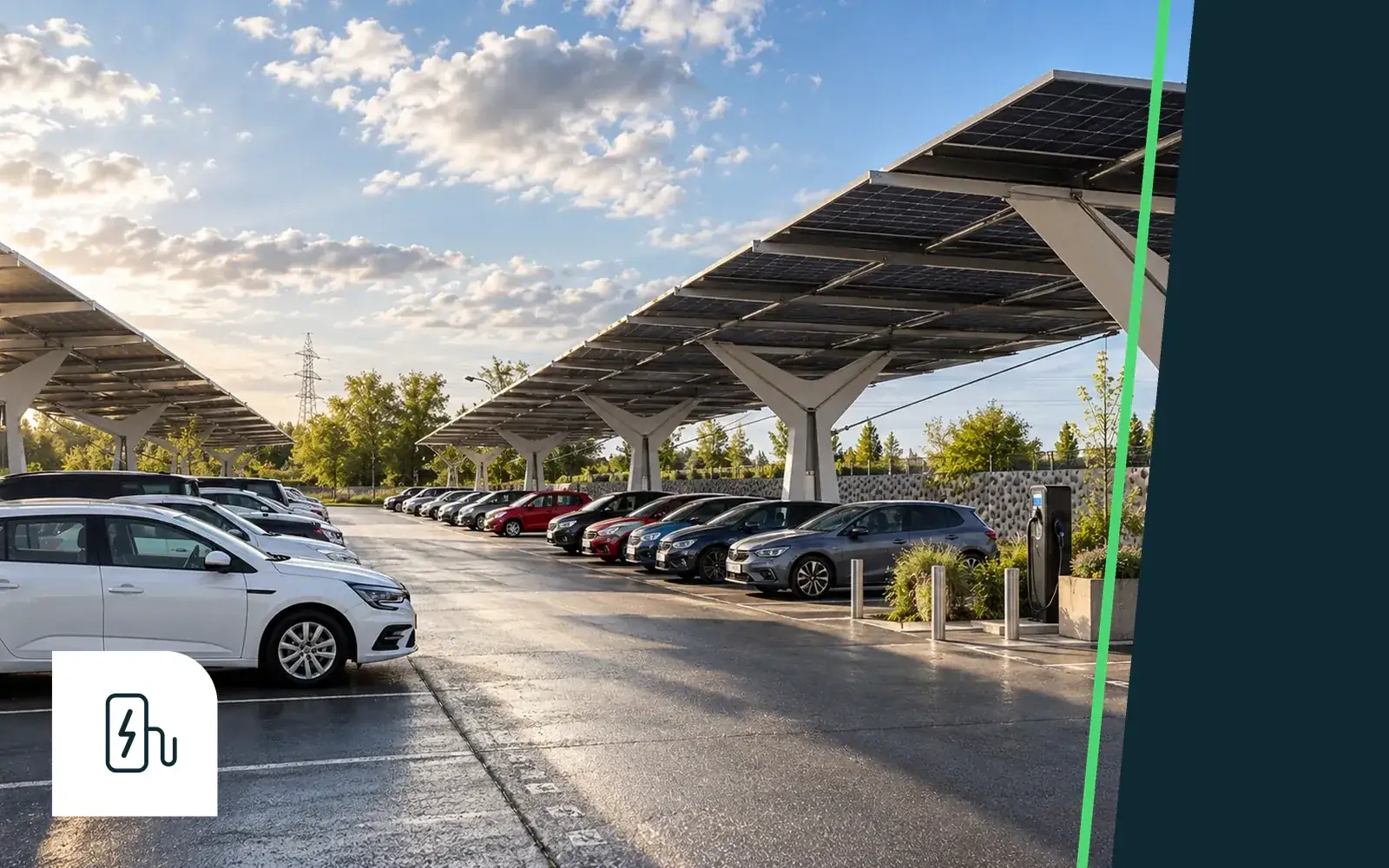
A canopy repeated over hundreds of metres becomes the most visible element of the site. Slender V pillars, a continuous roofline and fewer columns give the car park an identity consistent with the building.
Phased works
With prefabrication, site work is reduced to foundations, lifting pre-assembled modules, tensioning and fitting panels. Zones are handled one after another, often outside opening hours.
Creating value
Electricity used by the shops, charging for customers, rent from a third-party investor: several models coexist. A demountable structure also lets a site generate value over a short period if urban redevelopment is planned.
Frequently asked questions
Does the car park stay open?
Yes. Works are phased by zone and scheduled to limit disruption at busy times.
Can we offer charging to customers?
Yes. The SUUN structure includes routes and mounts for chargers.
General information, up to date at the date shown. Design and regulatory compliance of each project must be validated by the competent teams.